
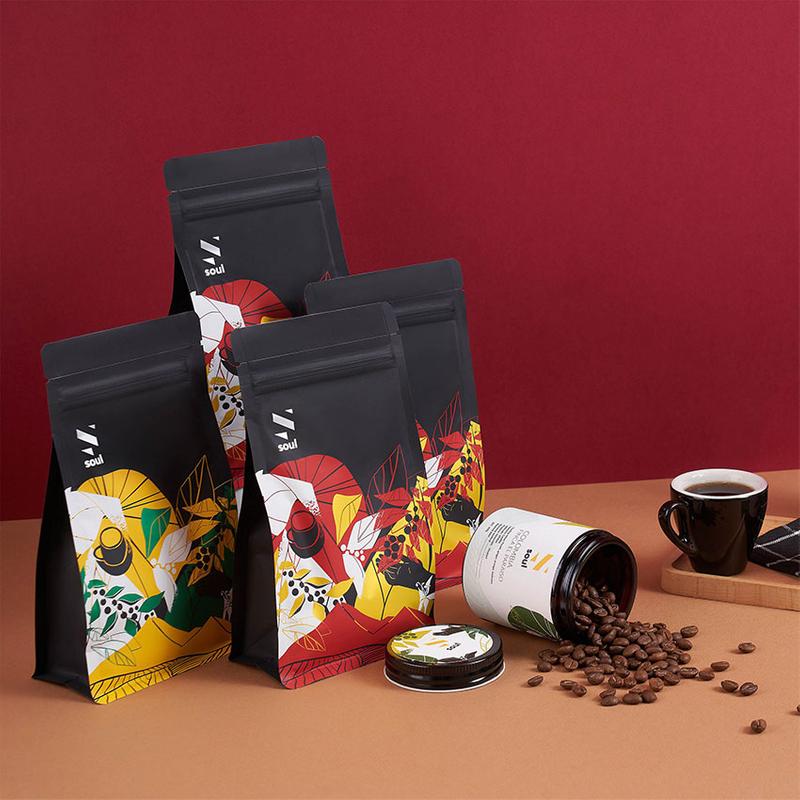
Custom Coffee Packaging Bags: A Complete Guide for Wholesale Buyers
Coffee packaging plays an important role in protecting product freshness, building brand recognition, and improving the customer experience. For coffee roasters, private-label brands, distributors, and wholesale buyers, choosing the right packaging involves much more than selecting an attractive bag.
The material structure, barrier performance, bag style, closure system, printing method, and order quantity can all influence packaging performance and overall cost.
In this guide, HEYI PACKING explains how to choose custom coffee packaging bags for different products and business requirements.
1. Why Custom Coffee Packaging Matters
Coffee is sensitive to oxygen, moisture, light, and environmental conditions. After roasting, coffee also releases carbon dioxide, making packaging design especially important for whole-bean products.
Appropriate packaging helps businesses:
- Reduce exposure to oxygen and moisture.
- Protect coffee aroma and flavor during storage.
- Improve shelf presentation and brand recognition.
- Offer convenient opening and resealing features.
- Support different retail and wholesale pack sizes.
- Communicate product information through custom printing.
Packaging cannot compensate for poor storage conditions or guarantee a particular shelf life. The right material structure should be selected according to the coffee product, filling process, distribution environment, and required shelf-life performance.
2. Popular Types of Coffee Packaging Bags
Different bag structures offer different advantages in terms of appearance, filling efficiency, storage, and cost.
Stand Up Coffee Pouches
Stand up pouches are a popular choice for retail coffee packaging because they can stand upright on shelves and provide a large printable surface.
Common features include:
- Bottom gusset for improved shelf presentation.
- Optional resealable zipper.
- Optional one-way degassing valve.
- High-barrier laminated materials.
- Matte, gloss, or other decorative finishes.
Stand up pouches can be suitable for ground coffee, whole-bean coffee, and specialty coffee products when the material and closure system are properly specified.
Flat Bottom Coffee Bags
Flat bottom bags, sometimes called box-bottom coffee bags, offer a structured appearance and multiple printable panels.
Their advantages include:
- Stable shelf positioning.
- A premium, box-like presentation.
- Front, back, and side panels for branding.
- Compatibility with selected zipper and valve configurations.
These bags are often considered by specialty coffee roasters and premium retail brands.
Side Gusset Coffee Bags
Side gusset bags expand along the sides as they are filled, making them useful for a range of coffee packaging applications.
They can be suitable for larger quantities and traditional coffee packaging formats. Closure options and barrier structures depend on the product design and filling process.
Quad Seal Coffee Bags
Quad seal bags use four vertical seals to create a structured package with defined side panels.
They are frequently considered for premium packaging and applications requiring a consistent shelf appearance.
Flat Pouches and Sachets
Flat pouches are useful for smaller portions, samples, and selected single-use coffee products.
Depending on the product and filling system, they may be used for coffee samples, instant coffee, or other portion-controlled applications.
3. Choosing the Right Coffee Packaging Materials
Material selection is one of the most important decisions in custom coffee packaging.
Many coffee bags use laminated flexible packaging structures that combine several materials to achieve the required mechanical strength, printability, and barrier properties.
PET-Based Laminates
Polyethylene terephthalate (PET) is commonly used as an outer layer in flexible packaging laminates.
It can provide:
- Good printability.
- Dimensional stability.
- Mechanical strength.
- Compatibility with selected barrier and sealant layers.
PET alone does not provide every performance property needed for coffee packaging. It is commonly combined with other materials.
PE Sealant Layers
Polyethylene (PE) is often used as an inner heat-sealing layer.
Depending on its grade and the laminate design, PE can provide suitable sealing performance and flexibility.
Aluminum Foil Laminates
Aluminum foil is used in selected high-barrier packaging structures because it can provide strong protection against oxygen, moisture, and light when incorporated into a properly manufactured laminate.
However, foil structures can affect cost, flexibility, and recyclability.
Metallized Films
Metallized films are another option for coffee packaging applications that require enhanced barrier performance.
Their actual barrier properties depend on the film construction, coating quality, and finished laminate.
Paper-Look Coffee Bags
Kraft-paper or paper-look coffee bags are popular among brands seeking a natural visual appearance.
However, paper appearance does not necessarily mean that a finished bag is recyclable, compostable, or plastic-free. Many paper-look coffee bags contain functional plastic or other barrier layers.
Material selection tip: Ask your packaging supplier about oxygen transmission rate (OTR), water vapor transmission rate (WVTR), seal strength, and material suitability for your product. Where needed, request testing data for the proposed finished structure.
4. Do Coffee Bags Need a One-Way Degassing Valve?
Freshly roasted coffee beans release carbon dioxide after roasting.
A one-way degassing valve is designed to allow gas to escape from the package while limiting outside air entry under appropriate operating conditions.
Valves are commonly considered for freshly roasted whole-bean coffee.
However, not every coffee product requires a valve. The decision depends on:
- Whether the product is whole-bean or ground coffee.
- Time between roasting and packaging.
- Degassing characteristics.
- Filling and sealing processes.
- Intended shelf life and distribution conditions.
For some products, other packaging processes or configurations may be more appropriate.
Discuss valve requirements with your coffee production and packaging teams before finalizing the bag specification.
5. Common Coffee Packaging Bag Sizes
Coffee brands often request bags for 100 g, 250 g, 500 g, and 1 kg product quantities.
| Coffee Fill Weight | Typical Application |
|---|---|
| 100 g | Samples, trial packs, specialty products |
| 250 g | Retail coffee and specialty roasters |
| 500 g | Retail and direct-to-consumer products |
| 1 kg | Foodservice, wholesale, and larger retail packs |
These are common fill-weight categories, not fixed bag dimensions.
The actual bag width, height, and gusset depth depend on coffee bean size, bulk density, bag structure, filling method, and required headspace.
For this reason, a packaging supplier should confirm dimensions through product information and sample testing rather than selecting a size based on fill weight alone.
6. Custom Printing Options for Coffee Packaging
Custom printing helps coffee brands differentiate their products and communicate important information.
Rotogravure Printing
Rotogravure printing is commonly used for repeat production and higher-volume packaging orders.
It can offer consistent print quality, although cylinder preparation costs and production requirements should be considered.
Digital Printing
Digital printing can be useful for shorter production runs, multiple designs, and frequent artwork changes, subject to supplier capabilities and material compatibility.
Matte and Gloss Finishes
Matte finishes can create a restrained, premium appearance, while gloss finishes can emphasize colors and printed graphics.
The choice should support the brand identity and packaging application.
Other Customization Features
Depending on the bag design and manufacturing capabilities, buyers may request:
- Resealable zippers.
- One-way degassing valves.
- Tear notches.
- Hang holes.
- Transparent windows.
- Custom surface finishes.
- Multiple artwork versions.
All features should be confirmed with the manufacturer before production.
7. How to Choose a Coffee Packaging Manufacturer
When sourcing custom coffee packaging bags, wholesale buyers should evaluate more than unit price.
Important factors include:
Material suitability: Can the supplier explain the proposed laminate structure and its intended barrier performance?
Manufacturing capability: Can the supplier produce the requested bag style, dimensions, and accessories?
Printing quality: Can the supplier review artwork and provide realistic production specifications?
Quality control: What inspections are performed for dimensions, seals, appearance, and print consistency?
Sampling: Can the supplier provide samples for filling and sealing trials?
Communication: Does the supplier clearly explain lead times, order quantities, tooling charges, and production requirements?
A reliable sourcing process starts with a clear specification and continues through sample approval and production quality checks.
8. What Affects the Wholesale Price of Coffee Packaging Bags?
The unit cost of custom coffee bags varies depending on the specification and order requirements.
The main factors include:
- Bag dimensions and structure: Larger or more complex bags generally require more material and processing.
- Material composition: High-barrier laminates and specialty materials can change the cost.
- Printing method and colors: Artwork complexity and print setup influence pricing.
- Accessories: Valves, zippers, and other features add components and manufacturing steps.
- Order quantity: Larger production runs may reduce setup cost per unit.
- Sampling and tooling: New specifications may require sample development or printing setup charges.
- Packing and shipping: Carton configuration, shipment volume, and destination affect delivered cost.
For an accurate quotation, buyers should provide detailed specifications rather than requesting a price based only on bag capacity.
9. How to Request a Custom Coffee Packaging Quote
Before contacting a supplier, prepare the following information:
- Coffee product type: whole beans, ground coffee, or instant coffee.
- Required fill weight.
- Preferred bag style.
- Approximate bag dimensions, if available.
- Material or barrier requirements.
- Valve and zipper requirements.
- Number of printed designs.
- Estimated order quantity.
- Artwork files, if available.
- Destination country and delivery requirements.
If you do not have final bag dimensions or material specifications, provide the coffee product details and desired packaging appearance so the manufacturer can review suitable options.
10. Frequently Asked Questions
What is the best packaging for roasted coffee beans?
The best packaging depends on the product’s degassing behavior, required shelf life, storage conditions, and filling process. High-barrier bags with suitable seals are commonly considered, and a one-way valve may be appropriate for certain freshly roasted whole-bean products.
Can I customize coffee bags with my own logo?
Yes. Custom coffee packaging can include brand logos, artwork, product information, and selected finishing options. Printing methods and minimum order requirements vary by supplier.
What is the minimum order quantity for custom coffee packaging bags?
Minimum order quantities depend on the manufacturer, bag construction, material, printing method, and number of designs. Buyers should request a quotation based on their exact specification.
Are kraft paper coffee bags environmentally friendly?
A kraft-paper appearance alone does not establish environmental performance. The complete material structure, local collection systems, and available recycling or disposal routes should be considered before making environmental claims.
How can I test coffee packaging before bulk production?
Request physical samples and conduct filling, sealing, storage, and distribution tests appropriate to your product. Barrier and shelf-life testing may also be necessary.
11. Custom Coffee Packaging Solutions from HEYI PACKING
HEYI PACKING works with businesses seeking custom flexible packaging solutions for different product applications.
For coffee packaging projects, buyers can discuss bag structures, material options, printing requirements, sizes, and selected functional features according to their specifications.
Whether you are developing a new coffee brand or reviewing packaging for an established product line, a clear packaging specification is the first step toward efficient sourcing.
Looking for custom coffee packaging bags?
Contact HEYI PACKING to discuss your packaging requirements and request a quotation.
Website: https://www.heyipackage.com/
Contact: https://www.heyipackage.com/contact/